

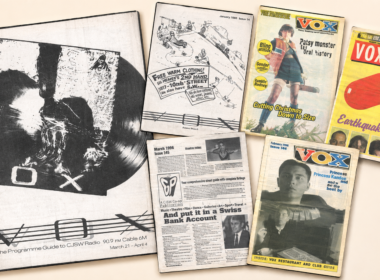


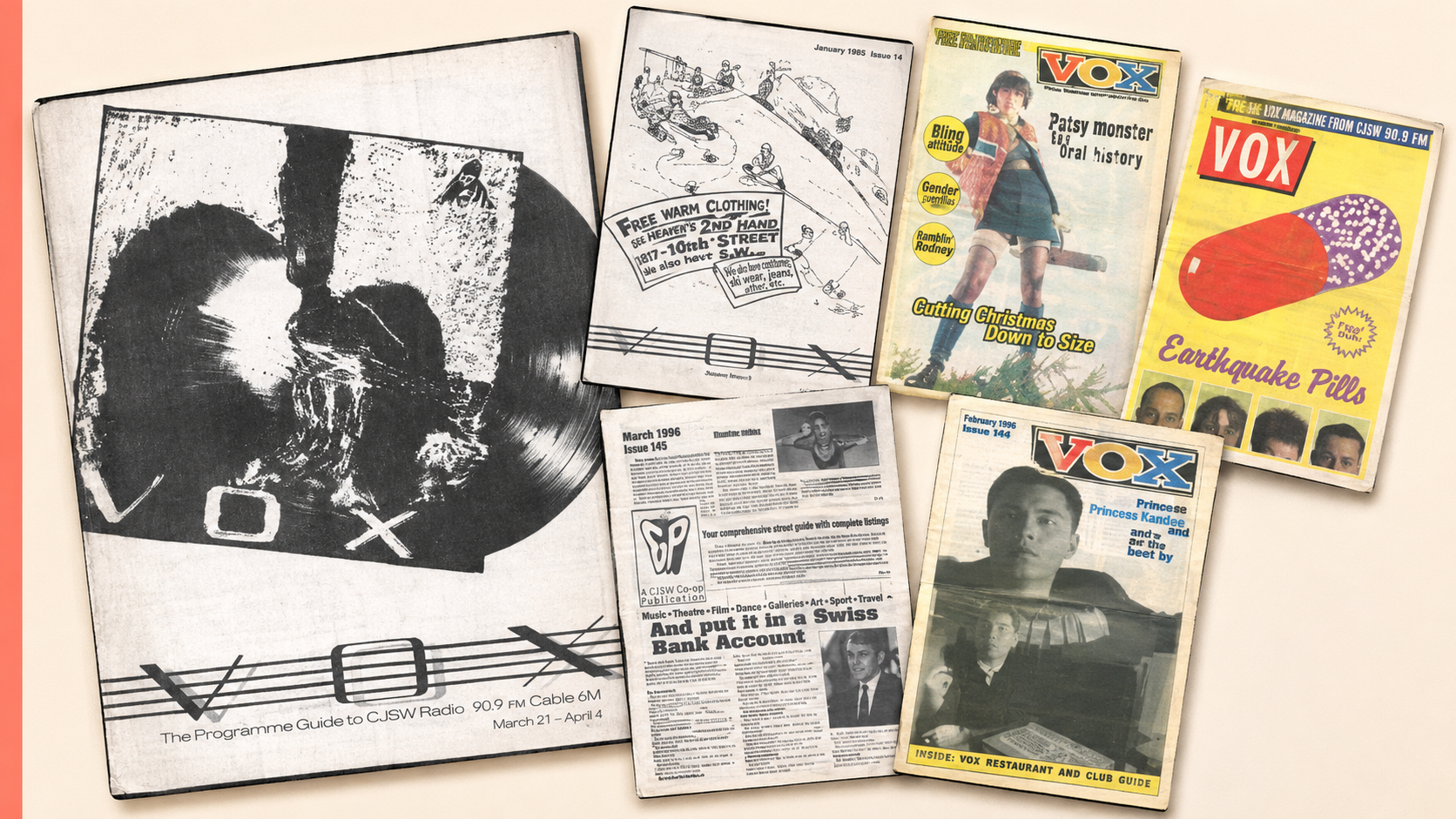
VOX magazine gave Calgary’s independent music scene something worth missing: space on the page. Launched by CJSW in September 1983, the monthly arts and entertainment publication covered music and local bands alongside the station’s programme guide. Its regular run ended in 1998. Our view is that its importance goes beyond nostalgia for print. VOX treated the culture being made here as something worth paying attention to.
What was Calgary’s VOX magazine?
If you remember it as the VOX newspaper, you’re thinking of a publication the University of Calgary’s library identifies as VOX magazine. Grant Burns and Shelley Youngblut edited its first issue. Its mix included record reviews, interviews and features on local and independent bands.
That combination matters. A programme guide helps you find a show. A review gives you something to agree with, argue about or follow up on. A feature gives an unfamiliar name enough room to become interesting. Together, those things can turn a reader into a listener.
For a city’s music scene, that is useful work. A band doesn’t need to become nationally famous before its songs deserve a considered response. Local coverage can make room for the uncertain early stages, when the audience is small and the next step is still unclear.
Is VOX magazine still around?
The original Calgary VOX is no longer a regularly published magazine. The University of Calgary dates its final printing to 1998, when Calgary Straight purchased it. That answers the question about the original run, but there are later echoes.
CJSW’s store lists a MoxVox 40th Anniversary Zine/Print. An anniversary publication is different from the old monthly returning to regular circulation.
The station has also returned to VOX as a musical record. Its February 24, 2024 episode of Fossil Records identifies March 1987’s VOX volume 38 as its reference point. The tracklist includes Los Lobos, The Stranglers and No Limbo Lasso. Those old pages can still lead someone towards a song.
Why VOX mattered to Calgary’s music scene
We think the strongest case for remembering VOX is the kind of attention it represented. Music coverage gives a city a way to talk about itself beyond its largest venues and most familiar names. It lets readers take an interest in work they haven’t already decided to like.
That is also what makes an old local publication valuable years later. A review written near an album’s release captures a response before hindsight settles the story. A band feature preserves the moment when the future was open. Even a programme guide records choices about what deserved airtime.
There is a human connection in the editorial history, too. The university’s account identifies former VOX editor Ian Chiclo, who edited the magazine from 1991 to 1995, as a later editor and publisher of Fast Forward Weekly. Calgary’s arts publications were connected through people as well as readers.
The nostalgia is in the way you found things
If you read VOX, the associations belong to you. It might bring back a particular band, a period of your life or someone who insisted you listen to a record.
There is also something appealing about a publication with an end. You can browse it without deciding what to search for. An unfamiliar name sits beside something you recognise. You turn the page because it is there.
That doesn’t make every old review wise, or every earlier version of Calgary better. Nostalgia becomes more useful when it makes us curious. It sends us back to the artists who received attention, the names that slipped out of conversation and the records we might hear differently now.
What Calgary should keep from VOX
The University of Calgary’s VOX collection is a starting point for following that curiosity. CJSW’s archived broadcasts offer another route back into the music.
For us, the lesson is practical. Read local criticism. Listen to an unfamiliar act. Keep the programme or publication that helped you find it. Give today’s artists the attention we now wish we could recover for yesterday’s.
Calgary will keep changing. We should keep making a record of the people who give it something to listen to.
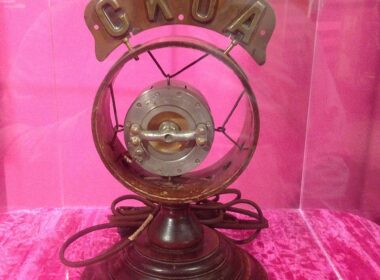
For more Alberta music history, read our look at CKUA’s beginnings in 1927.